Skip to content
NurseUniforms.co.in by MISHAREN Garments

Uniform Fabric and Colours: What We Stitch With

Five fabrics and nine stock shades, and how hospitals choose between them for each role.

Choosing uniform fabric and colours comes down to three questions: how the garment should feel through a long shift, how often it will be washed, and how easily staff should be told apart. We work with five fabrics, each matched to the garments it suits, and nine stock colours that cover most hospital colour schemes.

The table below shows which fabric goes into which garment. Further down, each fabric is described by feel, weight and care, followed by notes on choosing colours by department and on keeping shades the same from one order to the next.
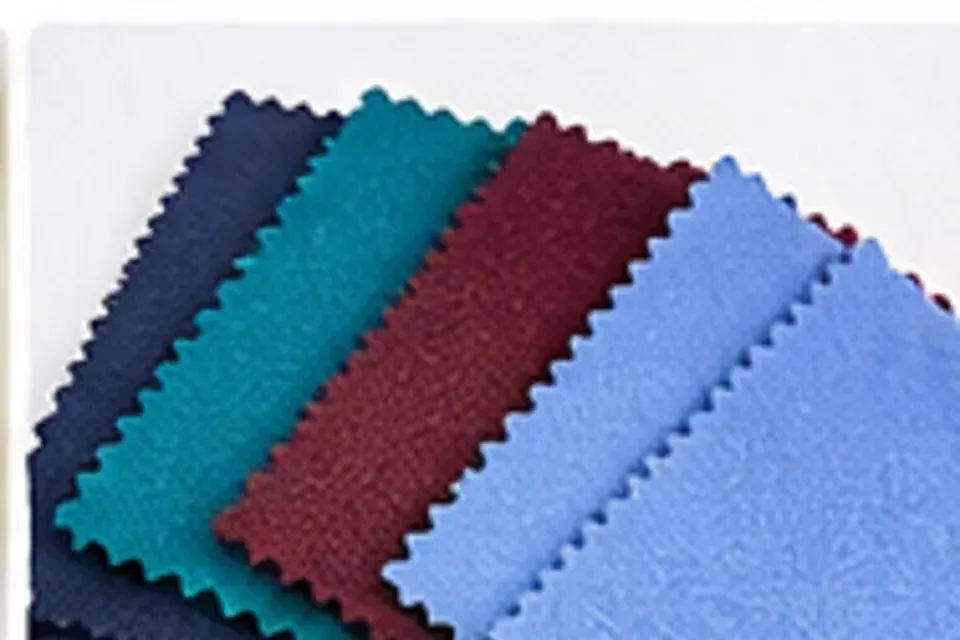
Poly-cotton uniform fabric swatches in navy, teal, maroon and sky blue

Which fabric goes into which garment

Colours we stock

  • White
  • Navy blue
  • Sky blue
  • Royal blue
  • Teal
  • Bottle green
  • Maroon
  • Grey
  • Black

The fabrics, one by one

Every fabric here is chosen for daily wear and frequent washing. We describe them by how they feel and how they behave in the wash; the right one for your order is confirmed in the quotation.

  • Poly-cotton 65/35: our standard poly-cotton scrub fabric, at 180–200 GSM, used for scrub suits, nurse uniform sets and OT dress. It feels smooth and medium-weight, creases less than cotton, dries quickly and keeps its shade well over many washes.
  • Cotton: soft and breathable, with a more natural feel against the skin. It creases more and can shrink slightly on the first wash, so it suits staff and buyers who prefer comfort to a crisp finish, and it is a common choice for patient gowns and some theatre sets.
  • Poly-viscose: a smooth fabric with a gentle drape and a slight sheen, used for salwar and kurta uniforms where a softer fall looks better than a stiff one.
  • Poly-cotton twill: a firmer weave with a fine diagonal line, used for lab coats and doctor coats. It holds a collar and lapel well and stands up to daily wear over other clothes.
  • Poly-viscose suiting: a dressier fabric for front office, reception and supervisor uniforms, where staff are expected to look formal rather than clinical.

Caring for each fabric

All our fabrics can be machine washed. Wash dark colours such as navy blue, maroon and black separately for the first few washes, and turn embroidered garments inside out. Poly-cotton and poly-viscose need only a warm iron; cotton and twill take a hotter iron and look crisper for it. Avoid bleach on coloured garments, as it fades the shade unevenly. Your institution's laundry will have its own routine, and our quality check confirms that the approved sample's colour and finish carry through to every piece we pack.

Choosing scrub colours by department

Colour is the quickest way for patients and visitors to tell roles apart. A common arrangement is one colour for nursing staff, another for the operation theatre, white for doctors' coats and the lab, and a darker shade such as grey or black for security and housekeeping. Some hospitals go further and give each ward or unit its own shade.

Lighter colours like white and sky blue look clean and calm on wards, but show marks sooner. Mid and dark shades such as royal blue, teal, bottle green and maroon hide everyday wear better. Whatever you choose, we make each garment to the colour and pattern your institution prescribes. If your scheme needs a shade we do not stock, ask at the enquiry stage and we will tell you whether we can source it.

Keeping uniform fabric and colours the same across reorders

Dyed fabric can vary slightly from one lot to the next, which is why mixed old and new uniforms sometimes look mismatched on a ward. When you reorder, we work from your approved sample, and our quality check compares the new pieces with it. If a new lot looks visibly different, we tell you rather than send it quietly.

Two habits help on your side. Reorder by the style and colour names on your last quotation rather than by description, and if a large top-up is due, order it in one go rather than in several small batches, so all the new pieces share a single fabric lot.

Questions buyers ask

Which is the most common poly-cotton scrub fabric?

We use poly-cotton 65/35, which means 65 per cent polyester and 35 per cent cotton, at 180–200 GSM for scrubs, nurse uniform sets and OT dress. The polyester gives it shape and quick drying; the cotton keeps it comfortable.

Is pure cotton available for scrubs?

Cotton is offered for OT dress, patient gowns, caps and coats. For other garments, ask in your enquiry and we will confirm in the quotation whether cotton is possible for that style.

Can different departments wear different colours in one order?

Yes. Choose a colour per style or per department from our stock shades. We pack each colour separately, labelled, so the order is easy to hand out.

Will white uniforms be see-through?

Our poly-cotton at 180–200 GSM is heavy enough for white and pale shades in everyday wear. Still, check the sample in daylight before approving the bulk order if this matters to your team.

Get a quotation

Tell us the product, quantity and your city. We reply with questions or a quotation.

  • Bulk orders from 25 pieces per style. Sizes can be mixed within a style.
  • Single sets for individuals on WhatsApp, prepaid, sent by courier.
  • Computerised logo embroidery available.
  • Delivered across India by courier or transport.

10-digit mobile number, e.g. 98xxx xxxxx.

Total pieces, and per size if you know it.

Logo embroidery needed?

Styles, colours, sizes, logo placement, delivery date.

WhatsApp us